“Physicians are coaches. Patients are players.”

by e-Patient Dave on December 31, 2008

I don’t know who Stanley Feld is, but he just became my friend, with a terrific post on doctor as coach, patient as player. It starts:

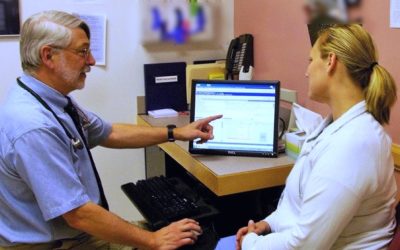
The role of patients with chronic diseases and their physicians must be clear to both patients and physicians. Physicians are coaches. Patients are players.

This resonates with what’s become my favorite item from Chapter 2 of our white paper, e-Patients: How they can help us heal health care: Preliminary Conclusion #6, which is “The best way to improve healthcare is to make it more collaborative.”

It resonates particularly well with me because my own e-patient community, the kidney cancer group on ACOR.org, taught me that increasingly cancer has become not an immediate threat to life but a chronic condition.  Then, when I read Anticancer: A new way of life, an astounding idea came to my attention: cancer without disease.

Cancer without disease!

Astounding, and I’ve never heard it mentioned elsewhere; but here I am, a living example.  I still have metastases in me, but I don’t have a trace of illness.

And, thank you very much, I’d like to keep it that way.

Funny thing is, though, in my case, I’m getting more advice on how to do that (chronic management, keeping it that way) from my reading than I am from my physicians!  (Especially from reading Anticancer.)  I’ll be talking to them about that.

Patient Voices at CHCF’s Chronic Disease Care Conference

by Susannah Fox on December 29, 2008

This is the second in a series of posts about the California HealthCare Foundation’s Chronic Disease Care conference (the first was Happy Dogs in a Pile of Sticks).

Patient Voices: Managing Chronic Conditions, Living our Lives

Ted Eytan snapped a photo that captured this session: Patient Involvement Makes People Smile

Here is each person’s story: Read more…

Women and Health Care Disparities: Who Dies and Who Profits?

by Christine Gray on December 27, 2008

Are women dying of cancer the way they die of heart disease, because physicians trivialize their complaints and they are powerless to get second opinions?

How many decades has it taken for cardiologists, practitioners at the apex of the medical profession, to acknowledge that symptoms of heart disease for women may differ from those for men, and for general practitioners to address that fact?  Older women die of heart disease in droves because they are treated too late or ineffectually, or they cannot get the referral.  How long does it take for the public to catch on, or has it? Read more…

In the Spin II: You and Your Billing Code

by Christine Gray on December 23, 2008

Pass the Valium!

Previously on e-Patients.net I recounted the crazy-making quest for a second opinion on an abnormal mammogram (microcalicifications) as per the advice of New York Times health columnist and breast cancer survivor Jane E. Brody.  The gynecologist who ordered the mammogram refused to authorize a second opinion, however, deferring to the radiologist, who referred me back to the clinic and so on and so forth.

My primary care provider, who carefully reviewed the films and reports (sans compensation), thought a biopsy might be the safe thing.  She was not the referring entity, however.  The clinic was !#$^%$#@

I started over, skipping a few bases, securing a first-rate surgeon at the county hospital as the new referral entity.  In a futile attempt to waste no one’s time except my own, I hand-carried a disc of the imaging studies to the appointment.

Right?

Wrong!
Read more…

NIH Summit on Health Disparities

by Susannah Fox on December 17, 2008

NIH is sponsoring a summit this week, The Science of Eliminating Health Disparities. I heard about it from Mary Brophy Marcus’s article in USA Today and I found this press release online, but I haven’t seen other coverage of the event. If you spot stories about the summit in the news, on blogs, on Twitter, etc., please post links in the comments.

The summit program is a treasure trove of ideas for conference organizers who want to answer Gilles Frydman’s call to action.

NeuroTalk Parkinson’s Group Brings About Change at Michael J. Fox Foundation

by John Grohol on December 16, 2008

Our savvy e-patients over at NeuroTalk noticed the launch of a new service by the Michael J. Fox Foundation, one of the leading Parkinson’s disease advocacy and research organizations. The new service, called PD Online Research, is billed as a “new web community of scientists, industry professionals, grantmakers and financial investors dedicated to advancing the treatment, prevention, and cure of Parkinson’s disease.”

Notice a group missing from that list?

So did the members of NeuroTalk, who called the Michael J. Fox Foundation on the carpet for not including patients in this conversation at the onset.

Read more…

Breaking News at Hematology Meeting - for Patients

by Susannah Fox on December 11, 2008

Andrew Schorr is the founder of Patient Power, LLC, and shares this dispatch, his second for e-patients.net:

I had a whirlwind weekend at the Moscone Center in San Francisco where I broadcast five and a half hours of live interviews with leading hematologists and hematologist/oncologists on the latest news in a variety of chronic conditions. The audience was patients who could ask questions by calling our studio or via email. Read more…

Personalized Medicine, the Next Frontier

by Susannah Fox on December 10, 2008

Nancy B. Finn is a journalist with an expertise in the implementation of digital communications in health care. This is her second guest post on e-patients.net:

When an individual patient visits his or her doctor with a problem, traditional clinical diagnosis is made and treatment is administered based on the patient’s symptoms, medical and family history and results of lab tests.

In the e-health world of the 21st century, personalized medicine, a new approach to treatment and analysis of patients’ health issues, promises to revolutionize that process. Personalized medicine looks not only at an individual’s symptoms, labs and medical history but at the individual’s unique clinical genetic and genomic markers to determine a treatment program. Because these factors differ for each human being, the disease they carry and how they will respond to treatment will differ as well. Taking this to another level, personalized medicine enables doctors to make accurate predictions and assumptions not only about an existing condition but to make predictions about a person’s potential to develop a disease. This will enable clinicians to treat patients proactively rather than reactively resulting in a better outcome. Read more…

Saving Lives, Old-School Style

by John Grohol on December 9, 2008

What if there was a simple, old-school style procedure that could save tens of thousands of lives every year?

Better yet, what if it could be implemented at minuscule costs (about $3 million to rollout nationwide), and would require very little change in anyone’s procedure or daily lives?

What if that procedure was something as simple as going down a checklist before running any procedure on a patient?

Read more…

Virtual Participatory Medicine Town Meeting

by Alan Greene on December 7, 2008

On Friday Senator Tom Daschle announced a campaign to get input from the public about what healthcare reform should look like. “The Transition will host Health Care Community Discussions across the Country over the holidays this December to help his Policy Team put together their final recommendations for the New Administration.” 

What a novel approach.  What a change from the past when plans were written behind closed doors with little or no input from the public, i.e. the people whose lives are being impacted by the healthcare decisions being made. 

They want people to host Health Care Community discussions in our homes and in our neighborhoods between December 15 and December 31. Could we host a virtual one? Or at least a virtual extension of a physical one?

(I’d also like to host one in my home, official or not. You’re all invited.)
It is thrilling for the public to be invited to participate in the discussion, but with the invitation comes the responsibility to do something.  Perhaps we could use this blog to come up with ideas to answer their request — grand ideas, down to earth ideas, crazy no-way-in-the-world to implement ideas, practical ones that may seem too small to consider.  Let’s take this on as a “you asked for it” challenge.

Perhaps, the change that was promised, will be delivered.

Older Entries »