by Kathleen O'Malley | Sep 12, 2011
Guest blogger Tami Boehmer shares a recent conversation with e-Patient Dave about the pitfalls of survival statistics and the power of hope. Tami’s blog, “From Incurable to Incredible,” is at www.miraclesurvivors.com. I recently had the honor of...
by John M. Grohol, Psy.D. | Jul 24, 2011
I’m all for citizen journalism, and can even stand the content mills like LiveStrong, who have pimped out their name and brand in order to make a quick buck. But I draw the line with bad reporting and worse, biased representation of the data to prove a point....
by e-Patient Dave | Jun 23, 2011
e-Patients who want to collaborate with their physicians, and be responsible for their medical decisions, need to clearly understand what constitutes good evidence. It’s not always easy. Now Richard Smith, a 25 year editor of the British Medical Journal, has...
by Kathleen O'Malley | Jun 14, 2011
This guest post by SPM member Ellen Hoenig Carlson was inspired by a study on the prevalence of medical errors, published in the April issue of Health Affairs. Medical errors are one of the nation’s leading causes of death and injury. The famed 1999 Institute of...
by Jessie Gruman | Apr 22, 2011
Here’s an interesting (though oddly titled) post by Jon Richman: Lies, Damn Lies and Pharma Social Media Statistics. It is interesting because it beautifully un-packs misreporting on a topic of great interest to e-patients. It is oddly titled because while the...
by e-Patient Dave | Jan 29, 2011
We’ve recently been talking here about problems with poor study design in clinical trials. A health IT version of this problem raced through the newswires this week while I was on the road. The news coverage was particularly naïve, illustrating our point....

 Driving Transformation: Change Management Strategies for Integrating Participatory Medicine in HealthcareApril 6, 2024
 The Challenge for Medicare Part D Patients: Inability to Utilize Pharmaceutical Programs to Reduce Medication CostsMarch 29, 2024
 Shared Decision-making: Becoming a Better Advocate for your HealthcareMarch 28, 2024
 2024 SPM Update from Board Chair Mary HenningsJanuary 17, 2024
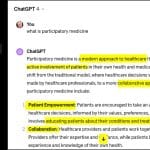 Hey ChatGPT, what’s Participatory Medicine?November 20, 2023
Recent Comments