by Susannah Fox | Jul 23, 2014
At 9am on Sunday, Sept. 7, 2014, Stanford Medicine X will host a discussion led by Pamela Ressler, Colleen Young, Meredith Gould and me about the power and pitfalls of people sharing their health experiences online. We are “flipping” the panel by sharing...
by Susannah Fox | Oct 21, 2013
A cross-post from susannahfox.com… On Friday, I spoke at the Albert Einstein College of Medicine, along with Kevin Pho, MD. During a planning call, the symposium organizers had shared results from a faculty survey: Fully two-thirds do not use social tools on a...
by Susannah Fox | Aug 6, 2013
“The most exciting innovation of the connected health era is…people talking with each other.” This is the essential point of a post that is garnering some great comments on my personal blog. I weave together concepts I developed in my work at the Pew...
by Susannah Fox | Jun 20, 2013
Becoming a caregiver seems to change people as health information consumers. They turn up the volume on every information source. They track down information as if it is a competitive sport.* They don’t let pay walls or office hours stand in their way....

by Susannah Fox | May 28, 2013
The Pew Research Center will release a new report about caregivers in June. As we prepare, I’m looking for stories to share with reporters so they can better understand the context for our data. If you have experience caring for a family member, a friend, or a...

 Driving Transformation: Change Management Strategies for Integrating Participatory Medicine in HealthcareApril 6, 2024
 The Challenge for Medicare Part D Patients: Inability to Utilize Pharmaceutical Programs to Reduce Medication CostsMarch 29, 2024
 Shared Decision-making: Becoming a Better Advocate for your HealthcareMarch 28, 2024
 2024 SPM Update from Board Chair Mary HenningsJanuary 17, 2024
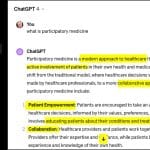 Hey ChatGPT, what’s Participatory Medicine?November 20, 2023
Recent Comments