by Sarah Greene | Sep 6, 2015
We science-medicine-poetry junkies, along with a sizeable portion of the world’s population, are mourning the death of Oliver Sacks, the neurologist and author who died last Sunday from metastasized melanoma. And as enthusiasts of Dr. Sacks’ catechisms on the soul of...
by David Harlow | Jun 20, 2015
Patient Reviews of Physicians: The Wisdom of the Crowd? Google Hangout On Air Hosted by David Harlow with Niam Yaraghi and Casey Quinlan Wed, Jun 24, 3:00 PM – 4:00 PM ET Presented by David Harlow (aka HealthBlawg) in association with The Society for...
by Ileana Balcu | Jun 17, 2015
Matthew S. Katz, MD, is the Medical Director of Radiation Oncology at Lowell General Hospital and a lifetime member of S4PM. He is former Chair of Communications Committee for the American Society for Radiation Oncology (ASTRO) and external advisor for Mayo Clinic’s...
by Casey Quinlan | Jul 2, 2014
Several SPM members were in attendance at the recent SIIPC14 conference at Dartmouth, where the ongoing work on healthcare system transformation has been the source of much great content on e-patients.net over the years. Casey Quinlan – yes, yours truly...
by Casey Quinlan | May 1, 2014
OpenNotesOne of our MD members, Peter Elias, tipped us off on our listserv to a post on KevinMD.com from a clinician who was expressing concern about the wisdom of OpenNotes, and fully sharing information with patients in general. Peter posted a comment, which we...

 Driving Transformation: Change Management Strategies for Integrating Participatory Medicine in HealthcareApril 6, 2024
 The Challenge for Medicare Part D Patients: Inability to Utilize Pharmaceutical Programs to Reduce Medication CostsMarch 29, 2024
 Shared Decision-making: Becoming a Better Advocate for your HealthcareMarch 28, 2024
 2024 SPM Update from Board Chair Mary HenningsJanuary 17, 2024
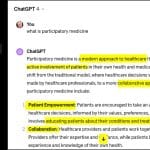 Hey ChatGPT, what’s Participatory Medicine?November 20, 2023
Recent Comments