by Ileana Balcu | Sep 13, 2013
Guest blogger Natasha Gajewski participated in the Flip the Clinic meeting at the Robert Wood Johnson Foundation. Below are her observations about the meeting and a thought you might consider. Natasha is an e-Patient and the developer of Symple, a symptom journal for...
by e-Patient Dave | Jul 28, 2012
What is the role of the patient? As we noted in April, TEDMED and the Robert Wood Johnson Foundation have designated “The Role of the Patient” as one of the twenty TEDMED Great Challenges for 2013, and the TEDMED site will host a big conversation about it...
by e-Patient Dave | Nov 7, 2011
“Patients are overwhelmingly interested in gaining rapid access to their notes … doctors have not experienced significant disruptions to their work.” Hear hear! That’s from a new commentary published Monday in Modern Healthcare about the...
by e-Patient Dave | Mar 17, 2010
This springs up from a Twitter discussion this morning. It’s Atul Gawande’s fault, for his book “Checklists.” :-) Forward-thinking clinicians are doing it; participatory patients should to. Let’s get to work. Checklists in hospitals can...
by e-Patient Dave | Dec 18, 2009
Cross-posted, with prolog, from the blog of Ted Eytan MD. Yesterday the Institute for Healthcare Improvement’s “WIHI” series hosted a terrific webcast on the Open Notes project that’s being funded by the Robert Wood Johnson Foundation. (I need...

 Driving Transformation: Change Management Strategies for Integrating Participatory Medicine in HealthcareApril 6, 2024
 The Challenge for Medicare Part D Patients: Inability to Utilize Pharmaceutical Programs to Reduce Medication CostsMarch 29, 2024
 Shared Decision-making: Becoming a Better Advocate for your HealthcareMarch 28, 2024
 2024 SPM Update from Board Chair Mary HenningsJanuary 17, 2024
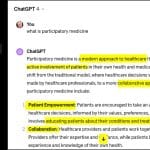 Hey ChatGPT, what’s Participatory Medicine?November 20, 2023
Recent Comments