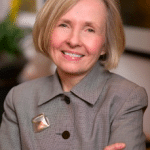
Why Gary Schwitzer joined the Society for Participatory Medicine
Correction: the email address for volunteering has been updated to volunteer@participatorymedicine.org
We’ve written many times about Gary Schwitzer and the excellent work he does at Health News Review. Last December I said reading health news carefully is a vital e-patient skill, and “Health News Review is easily the best website around.”
Gary just joined the Society for Participatory Medicine (at my suggestion!), and I asked him to say something about why. He replied: Read more
Maggie Mahar on Doctors & Patients Sharing Information
Prolific, unsinkable Maggie Mahar commented today on the Century Foundation’s HealthBeat blog about Paul Levy’s “Yes, Patients Can Help Their Doctors” introduction to my forthcoming book. Among other things she pointed out, correctly, that not everyone wants to be as engaged a patient as I was (am). My response touched on several things we frequently write about here, as participatory medicine emerges into the daylight.
__________
“For the record, I agree with everything you say, especially that it comes down to being true to oneself. IMO, empowerment is not about being uppity, it’s about being free to speak up and play as active a role as you want, to be as engaged as you want.
“My mom’s 100% empowered and engaged. Her husband was the polar opposite: “I don’t think we should be asking the doctors all these questions.” My good friend Monique Doyle Spencer, multi-time cancer kicker, considers herself not an e-patient (and explained why); meanwhile her husband (not her physician) found an effective treatment for Hand-Foot Syndrome (a nasty burning side effect) online. And Monique posted it online for others to discover. Her little blog now shows up in the first page of Google results for “Xeloda side effects.”
“My view is that this is a new dance, because a major new factor has arrived on the scene: information that was previously available only inside the fortress can now be found lying on the ground outside the castle walls. That doesn’t make everyone a genius – to the contrary, it raises questions of how to make good use of it. Not everyone wants to, as you say. And not every physician wants to “dance” that way. But for those who want it, a new world is possible.
“My own physician, Danny Sands, says in his speeches, “Embrace knowledge symmetry.” Not absolute symmetry – just the idea that it’s *possible*. The useful question is, how do we adjust our flaps to recognize the shift in the wind?”
Collaborative Care Technology Working Group forms to accelerate improvement in primary care, patient participation
Did you know that a major aspect of the Affordable Care Act (aka the health reform legislation) was significant funding to revamp primary care? I’m embarrassed to say I didn’t. There’s $10 billion (with a B) in funding for research in the first ten years on new models of primary care, and another $10 billion to support proven improvements.
That’s $20 billion, the same amount as the health IT incentives that have gotten so much publicity. But almost nobody has heard of this.
But that’s changing. A new working group is forming in Boston: CCTWG, the Collaborative Care Technology Working Group.
The group’s purpose is to accelerate doing something useful, promptly to make good use of that money: getting some minds together to do hard work, advancing the common perspective of what collaborative care can be, so that products developed for this movement can have a shorter learning curve. Their concept of “collaborative care” sounds an awful lot like participatory medicine to me:
Collaborative care organizes information, expertise, and resources around the “whole patient” for better decisions and optimal outcomes, starting with primary care.
First anniversary of our Declaration of Participation. Please renew!
How fitting for the Fourth – a year after our Declaration (see below), I just received my renewal notice for the Society for Participatory Medicine.
Here’s a Doctor’s Channel interview, posted a year ago today, in which Society co-chair Alan Greene MD draws an analogy with America’s early presidents:
Here’s the Declaration we posted a year ago, July 4, 2009, on the Society’s site: Read more
e-Patients and doctors both, wise up. If you haven’t already.
I’ve only been studying healthcare for two years – far less than most people on this blog – and I hesitate to be overly assertive. But I have, finally, reached the point where I feel confident in citing cases where people are simply being unscientific: ignoring evidence. That’s always hazardous, and it becomes insidious when it’s caused by a blind, unquestioning belief in our institutions.
Case in point:
Julie Thoren is an active practitioner of Participatory Medicine who’s seen first-hand the tremendous value informed e-patients share with each other. This morning she wrote to me about a post, How online patient communities make money from patient data, on the blog of KevinMD, a neighbor of mine in Nashua NH.
Kevin pointed out, correctly, that patients need to have their eyes open about what might be done with their data, etc. Commenter “Doc D” cited the chestnut “The plural of anecdote is not data,” and Julie responded about Participatory Medicine and the value she’s found in online communities.
Here’s my comment (with a few edits), reflecting on the realities I’ve personally seen and what others have written in JoPM (the Journal of Participatory Medicine): Read more
It Takes Guts To Be A Neuroendocrine Patient: A Story of Participatory Medicine
It may be time to mention again the definition of Participatory Medicine:
Participatory Medicine is a movement in which networked patients shift from being mere passengers to responsible drivers of their health, and in which providers encourage and value them as full partners.

The following guest post is a powerful demonstration that these are not empty words. Its author, Bill Claxton, is one of the newest ACOR list managers, helping to make sure the CARCINOID list provides the necessary help to the 950 members of that community, each one dealing with a rare cancer. I have never met him (but I surely hopes this will be rectified soon!) but have been impressed with his general understanding of technology issues. Little did I know! This post, based on earlier posts Bill sent to the ACOR group is full of medical jargon, requiring its own mini-dictionary and a couple of paragraph to explain this rare type of cancer. But it corresponds to the kind of conversations you can find in communities where expert patients share their wisdom. Here is the story of a remarkable man willing to travel wherever the optimal care is it will also take you around the world in the next few minutes.
Bill Claxton is an expert in internet video. He is Technical Director and Founder of the company Iterate Pte Ltd in Singapore. An expat from California, he has spent more than 20 years in Asia. In 2004 he was diagnosed with a mid-gut neuroendocrine tumor (NET) called carcinoid and has spent the past 6 years learning about this disease and sharing his knowledge with others. He has produced video recordings of every major North American medical conference dealing with neuroendocrine tumors, and webcasts these to audiences throughout the world. He also co-founded the Carcinoid & Neuroendocrine Tumor Society of Singapore, Asia’s first patient advocacy group focused on this disease.
Society’s ICSI keynote makes front page of Star-Tribune
The front page of Friday’s Minneapolis Star Tribune has coverage of the keynote address I was privileged to deliver on May 5 at the 13th Annual Colloquium of ICSI (Institute for Clinical Systems Improvement) and IHI (Institute for Healthcare Improvement). The article included mention of the Society for Participatory Medicine.
ICSI (pronounced “icksy”) is not known nearly as well as it should be. Formerly a Minnesota-centric organization, attracting about 300 to its conference, this year they drew about 500 nationwide. That’s good, because there was a lot of smart talk.
The speech title they requested (I’m not making this up) was “What e-Patient Dave Wants from Doctors, Hospitals and Health Plans.” Believe me, I had a few things to say. Slides will be posted later this week.
Patient-centered care: coordination and putting the compliance shoe on the clinician’s foot
The new definition of participatory medicine at the Society’s website notes that patients “shift from being mere passengers to responsible drivers of their health, and … providers encourage and value them as full partners.” As with any collaboration, this must include a hefty dose of listening by both parties.
I’ve just returned from an extraordinary week in Minnesota, with visits to several thought-provoking care facilities. The week was all about improvement: I spoke at the Institute for Clinical Systems Improvement and IHI Colloquium, I visited the brand new Frauenshuh Cancer Center where a friend works (wow), and on Saturday toured the Mayo Clinic. I returned with a headful of what’s possible.
Then I found a post on Paul Levy’s blog at my hospital, “Patients will teach us how to be compassionate.” He relates a problem of a chemo patient, a “difficult stick” for the needle people, who asked for the special IV team, who can handle difficult cases. She was told no, and got hurt. Paul asked the team to come up with a better approach. The team will now flag such patients in the system, and he asked them to convene some patients for a further discussion. Please see that post for the full story – it’s shorter than what I wrote in reply:
Joe Kvedar’s “cHealth blog” (Connected Health)
We’re long overdue in welcoming Joe Kvedar MD of Partners Healthcare to the blogosphere. From his About page:
“The term “connected health” reflects the range of opportunities for technology-enabled care programs and the potential for new strategies in healthcare delivery.
“A division of Partners HealthCare, the Center for Connected Health works with Harvard Medical School-affiliated teaching hospitals, including Massachusetts General and Brigham and Women’s Hospitals. I am also active in my specialty of Dermatology both as a clinician and educator.”
Dr. Kvedar is also on the Editorial Board of the Journal of Participatory Medicine.
His new blog, about connected health, is The cHealth Blog. Mazel tov!
Save lives first, *then* compete: Simple Interop for Healthcare
This post is my own expression, not an official view of the Society for Participatory Medicine.
Vince Kuraitis and David Kibbe are running an excellent series, “Is HITECH Working?”* In last week’s entry they linked to this slide deck by Wes Rishel and David McCallie of IT consulting firm Gartner. See discussion before watching.